
Two Bewildered Men In The Blast And Smoke
The Terror And Mercy Of That Strange Evening
Joshua Newton
3 min read
By Joshua Newton
Two Bewildered Men in the Blast and Smoke
He had on his mind some worries about that day’s collection. Barely enough, he thought, before he saw a tall, young man waving to stop. “Bhai-saab, Patel Nagar chaloge? Mujhe Ghaffar Market mein das minute ka kaam hai. Halting charges de doonga.” (Will you go to Patel Nagar? I have to stop at Gaffar Market for ten minutes. I will pay you the halting charges.)
The fair young chap looked close to six feet and sported a light beard. He seemed to be in his mid-twenties. Moolchand glanced at his watch: 5.30 pm.
Through the tame evening, Moolchand saw the motion of plush cars around the Imperial Hotel. In the passenger mirror he saw that the young man had settled with a bag in the back seat. The auto rickshaw moved.
“Saturdays!” Moolchand thought. He had to swerve through swarming men and women rushing—always rushing—brushing against each other and not remembering anyone in particular, sloshed in colour and their own winged desires for all things to be bought this evening: saris, sandals, crafts, school bags, pulses, potatoes, imitation jewellery, ladoos. Even thongs. Moolchand smiled then.
But he hated these beetles, these men cycling the rickshaws that always flung themselves into his path. “Morons!” Why can’t these pigs go somewhere else and sway their butts on their stupid rickshaws? There comes another one. Moolchand honked loudly and a few words flew from him, getting glued as spittle on that rickshaw-wallah. The man nodded and cycled away, around the auto, careful not to rattle the driver again. “Meek fools!” Moolchand thought of them.
His auto now cut into Ajmal Khan Road, through the mass of moving, mindless ones haggling for cheap cameras and phones. Smuggled ones. Phoney ones. “Phoney people!” he winced. Honk. Fools! Honk. Fools..
He sneaked a look at the young man and muttered, “Ghaffar Market.” Moolchand saw the young man leaving behind a black bag. “Please, I’ll be back in a minute,” he said, moving away. Moolchand pushed the auto to park it by the side of the road.
And there came another rickshaw crossing his path. An old idiot with such frail looks. Moolchand parked where he could and rushed out to finish it off with the man. The rage of the day had to be flung out on this silly fool, with his old rusting rickshaw looking as foolish as his face.
Out of the corner of his eye, Moolchand caught his passenger—his black cap moving through the stream of heads; did it turn back to glance at me for once, that unshaven face?—and returned with his fury at the rickshaw man. The old one smiled back at Moolchand, his wrinkled face cringing at Moolchand’s rage. They moved farther into the shade to carry on.
6.07 pm.
Around those two, the world went on. Buying, sneaking through, selling, bargaining, stopping to pull the kids together—a mass of voices and noises tangling into each other and balling up into the loudness that erupted in the next moment. Boom!
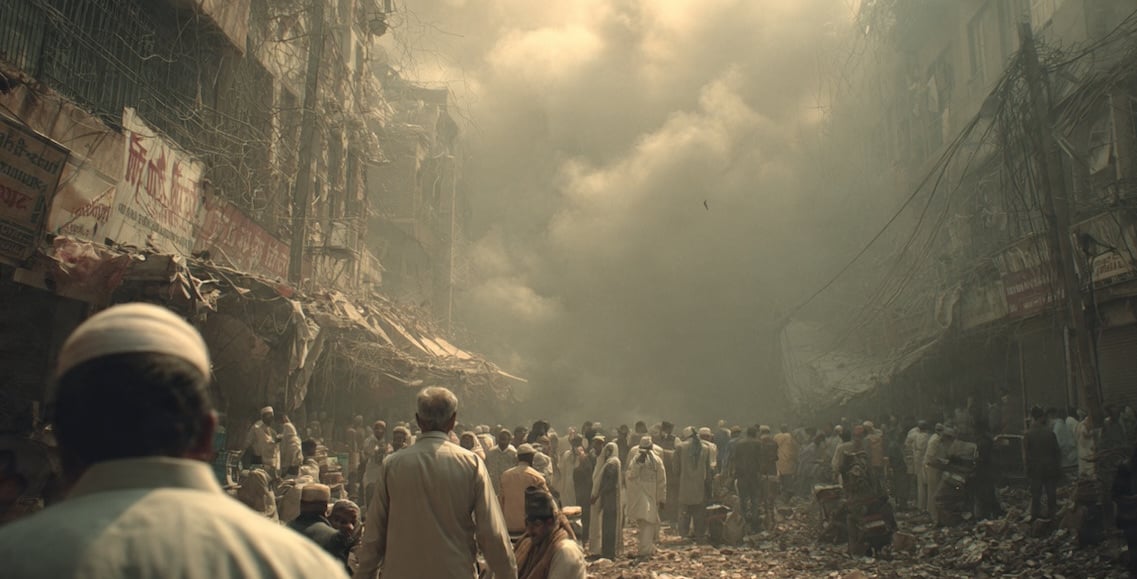
Moolchand’s auto rickshaw was now up in the air. Its steel and bolts and iron, reddened and blackened, ripped and strewn off in the next moment—everything a ball of fire spitting flames and ashes everywhere quickly killing 19 people who were strolling around. Moolchand, the forty-year-old, was flung a few yards, ripped away from his rage, from his enemy, the rickshaw-wallah, who now lay fallen on his knees away from him.
Moolchand slowly raised his head, too heavy, from the ground. White noise. Black smoke. The smell of burnt flesh. Pieces of arms or faces. His own face, arms, and legs coloured with red cuts. He was sunk in a splitting sting. His head still booming from the thud.
Through the shapeless holes in the smoke, Moolchand could see bodies. He couldn’t count. He was only thinking of the noise. He now took his time to unwind the moment before. It would dawn on him, a few moments later, how the black bag left behind by the tall, young passenger had changed the way he looked at the world.
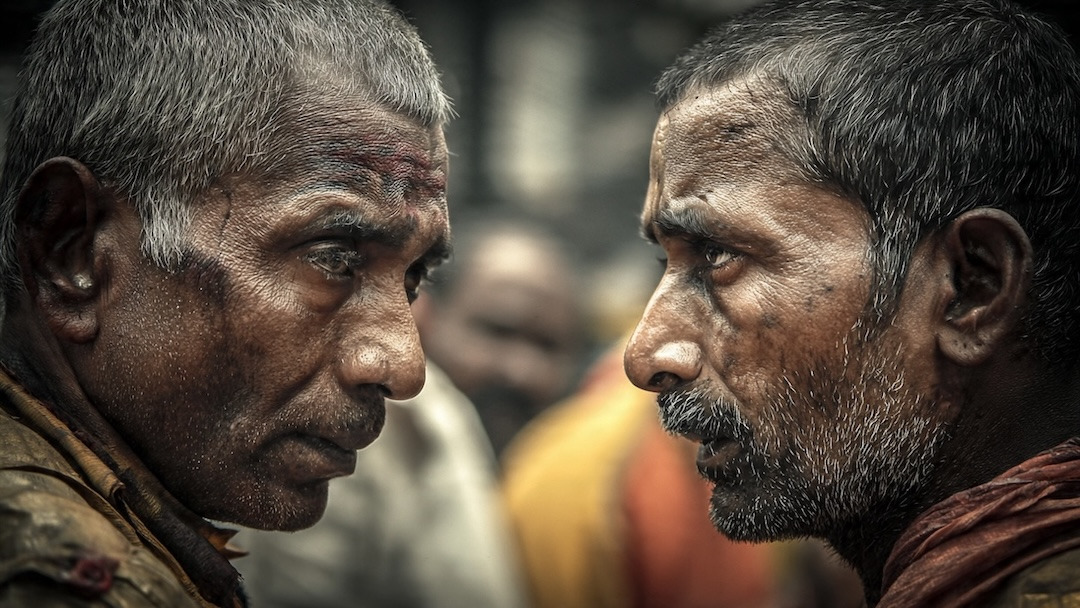
Soon enough he saw the other rickshaw-wallah—the old man with wrinkles and a meek smile—now standing through this evening of white light, towering over him, over any anger he had felt. The man he had despised as the enemy now gave him a teary smile, the two of them too dazed to thank the moment they had moved away from the black bag, to quarrel.
They now stood staring at each other in silence.
Gaffar Market Bombing / Life writing
Two men, briefly spared by accident. Two auto drivers, bound first by anger, then by ash. What survived was not rage, but the small mercy of having stepped aside, seconds before the city rearranged itself into fire.

Earthopia® is the trademark property of Bodhy Studios, founded by Joshua Newton.
All rights reserved. All content, methods, and materials on this website are protected by copyright law. Reproduction or distribution without authorisation is prohibited.
©2026 Bodhy Studios