The Way of The Native
A native’s tribute to his own people
Joshua Newton
7 min read
By Joshua Newton
The Way of The Native
I was a hungry young man—hungry to turn the writer in me to an author. It was a classic chutney of needs: the anxiety to prove as a writer mixed with the worry to put on the table, daily rice and curry. Like almost everyone in town, I was raised in my native language, Malayalam. I went to a local school and a local college and got a local university degree. Writing in English was a wish—so that I could get away into another world. But my grammar was shaky and my vocabulary just about average. Worse, I was scared of the world.
A ladder to escape our backyard
My journalism course was a fair start. But to get equipped in the language, I had seas to sail. The Week was the first magazine to give me a byline in English. An editor-friend at the Indian Communicator, a small, now defunct paper, asked me to assume the charge of its Sunday supplement. There, I worked on my craft to write one piece after another, one Sunday after another.
When a bunch of boys appeared in our town’s main square—Marine Drive— spreading out on the pavements piles of American and British magazines, I got my lucky break. Those magazines were used and dumped. Time and Newsweek came for ten rupees and Condé Nast Traveller for forty. For me, who couldn’t afford new subscriptions, they gifted a cheap collection of ‘instructive’ reading. At home, I tore out some of the best magazine reporting and read and marked out words and usages unfamiliar to me. Unfamiliar but desirable words; words as lovely as some red-lipped girls.
Soon, I got busy catching trains, chasing jobs. There weren’t as many jobs in Kerala to pick in the early nineties as now. Let alone writer jobs. All publications in Kerala were in Malayalam, except the two newspapers that already employed full-timers who seemed to hang on till their pension dates. Freelancing was unheard of in these parts. We had no mainstream non-fiction writing in English. Hell where would anyone go and write anything—on the compound walls?
English language was a ladder to escape our native backyard; a spiral dream stairway to reach the superior West. Yet, a disquieting facility for us. We shied away from the climb the language demanded, from its dizzying hairpins. We did not speak often in English. Before computers and Internet, we had not many reasons to write in English either.
Kerala had almost no writers in English other than a few newspaper reporters. We had no writing courses, no writing grants, no mentors, no visible daily communication in English. Finding the language a hard route, we the young, back then, sipped black colas and played Michael Jackson and Madonna on our Walkman players—an easy route to being ‘English’.
Not surprisingly, the writings on Kerala in English came from outside—from travel writers who arrived in our towns in search of ‘lesser societies’. They soberly informed us in English that Mohiniyattom was our traditional dance and fish molly was our staple dish. For decades, like the import of cotton and leather from the north, we consumed such written verdicts in English on ‘Kerala culture’ from outside.
As a writer bearing the angst, as a representative of the fed-up readers, I wanted to read something truer from Kerala in the language I loved most; something scooped out of the real lives of the natives of whom I am one; something I could unapologetically read as reliable ‘life writing’.
Autobiographical notes
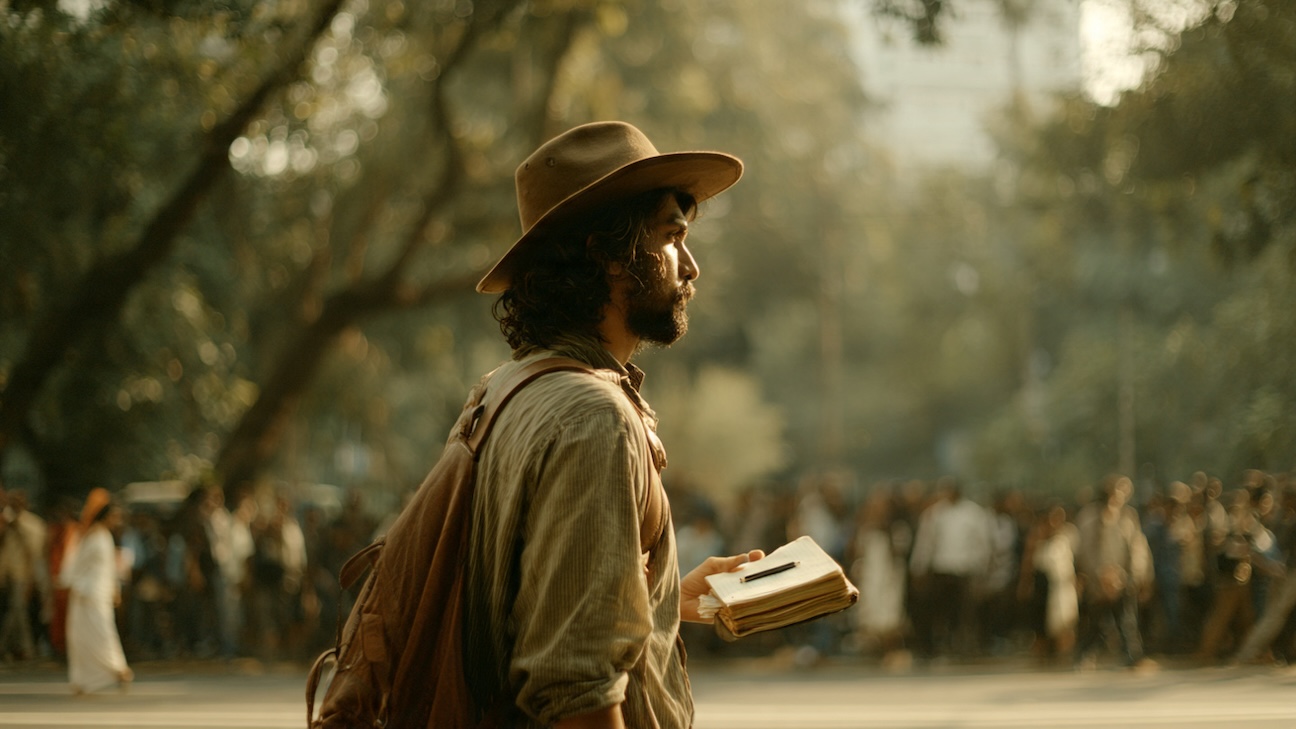
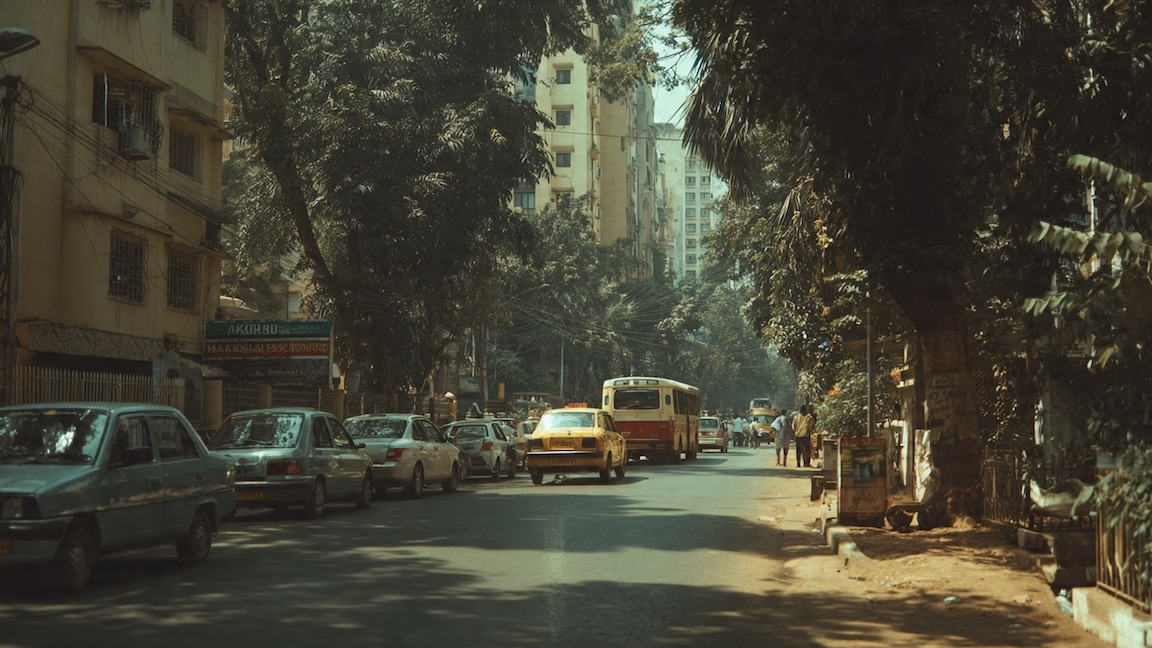
There is a holy, frantic commerce in the eyes of a writer who walks these streets to survive. To move through the Kochi humidity, notebook in hand, is to be a scavenger of the sacred—turning the din of traffic jams and the dust of nondescript roads into a currency that sustains the body and feeds the soul. It is a life of 'unreserved living', where every stranger is a potential verse..
What is it about this heavy, often indifferent world that occasionally exhales a line of perfect poetry? Poetry is the light that leaks through the cracks of a crumbling town; it is the evidence that even in a land of flatlands and smartphones, something remains un-axed and deep within us—waiting for the right storm to wash it clean.
Our daily human poetry
To carry this unfulfilled wish for many years, to remain in my faith—all of that was hard. Fifteen years later, I found a believer. My big day came when this man, who ran a chain of resorts in his own inimitable way, nodded to my plan. That morning, Jose Dominic sat in his office on Willingdon Island and listened to my wish. A book that explores a culture through its unknown people—that was the idea. He was a good reader. Slowly, he leaned back in his chair and said in a deep, rasping voice, “I’m with you.” He said I could do stories on his employees or freelances. I requested for a grant to support my writing. He agreed. It would be scraping by for one or two years, but then the book would be born. My joy was boundless.
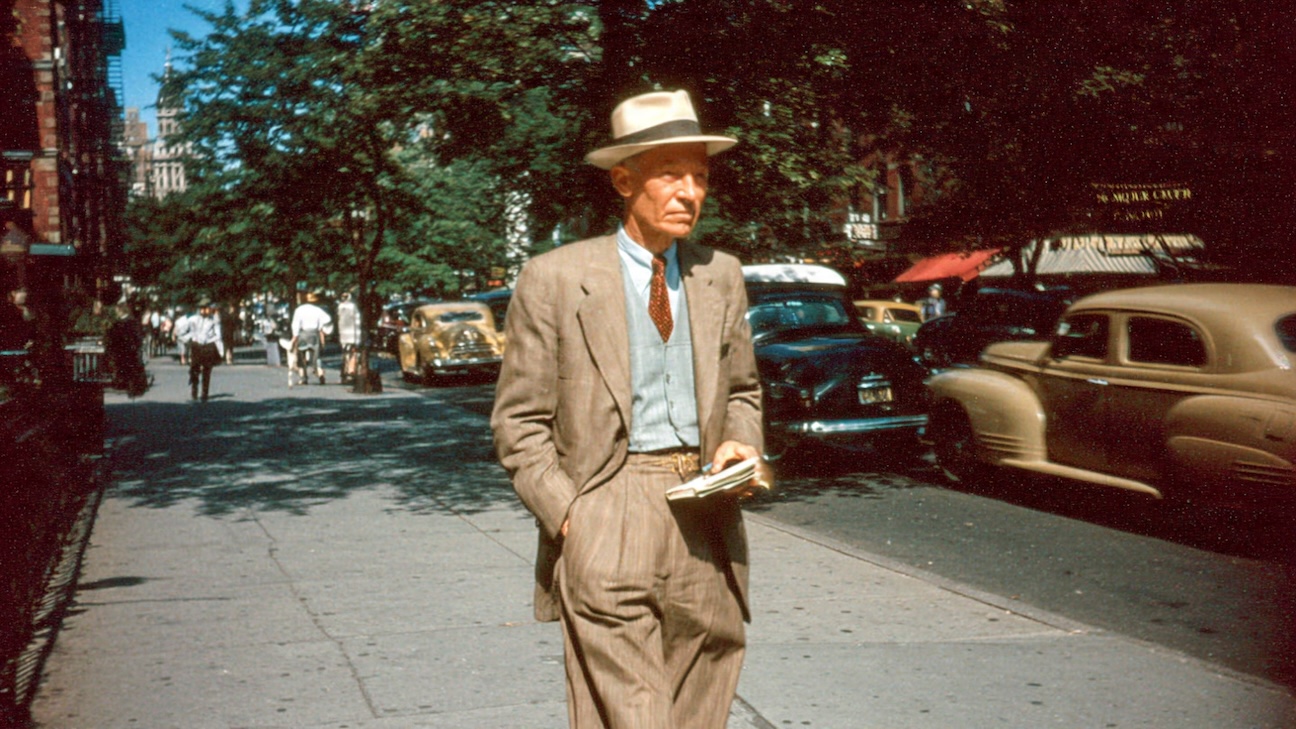
I had a model in The New Yorker’s Joseph Mitchell, who in the sixties chose fishers, bartenders and drunks from the Fulton Fish Market to write about. I also had a fund-support model in Alain de Botton whose book A Week at the Airport was supported by Heathrow Airport to write on the travellers, window cleaners and baggage handlers. And thus The Book of People was born. The research and interviews together took about ten months. Then a year to write. There were some of them I met and talked to and chose not to include. Whenever I fumbled, I dipped into Mitchell’s Up in the Old Hotel, Naipaul’s A Turn in the South and Rick Bragg’s Somebody Told Me. They were my guideposts.
Here’s what I have come to believe since: Our daily human lives do hold moments of poetry. I’m not sure which part has won in this book though—the poetry or the rawness. Everything narrated is factual or based on facts. Personal life stories are woven in through their day jobs. Obviously, I stand the risk of being called a faux-naïf examiner, somebody observing his own people as a foreigner and getting away with it. That’s okay. My interest was in digging up material from my own people to create something universal, a kind of work that resonates with readers anywhere.
A Rewarding journey
India has not encouraged many books of creative non-fiction (also called literary non-fiction). Suketu Mehta’s Maximum City was one. Katherine Boo, Akash Kapur, Sonia Faleiro and Aman Sethi had written one each. That was pretty much of it back when I published this book first. While the works above examine the political and social dimensions of the subjects, I chose to focus rather on the human side of the themes. By then, I had outgrown my teenage conviction that life had to be seen as a political kaleidoscope. Well, couldn’t there be something more dramatic to the life of a butterfly-park man than his caste shadows, for instance?
The work was daunting at times. There were too many facts to deal with in the first place. Hundreds of notes in my bag, long hours of taped conversations, thousands of everyday facts as trivial as the times of their bath to the colour of their nails and as profound as their pondering of suicide. These human conditions, when examined closely, humbled me.
Tomy, for instance, was the one who taught me what happens at the sea when men go fishing and precisely how a fish is caught. I also found through him how sorrows are hidden within each of us. Radhakrishnan taught me everything on lakes I know now. But the bigger lesson was why and how people are swallowed by silence. Though Narayanan talked for days to me about sattvic food, I could see later that he was actually beaming about his own stunning transformation. Koyamon, the pious Muslim on a distant west coast island, and Ramanathan Chettiar in a dusty, hot Tamil village are all symbols of the continuing human angst about the idea of righteousness. Beneath the colour and quotes of this book lie such human trajectories, deep, winding and hidden.
At the end of the day, I guess this is a native’s tribute to his own people. By arriving from nowhere to tell his people’s stories after wishing for it for long, perhaps the native writer is sharing his own joys and sorrows and dreams. For me, this enquiry into people and their micro-cultures offered a rewarding journey. I hope you would feel the same.
Appeared as the 'Foreword' to Joshua Newton's creative non-fiction work 'The Book of People'
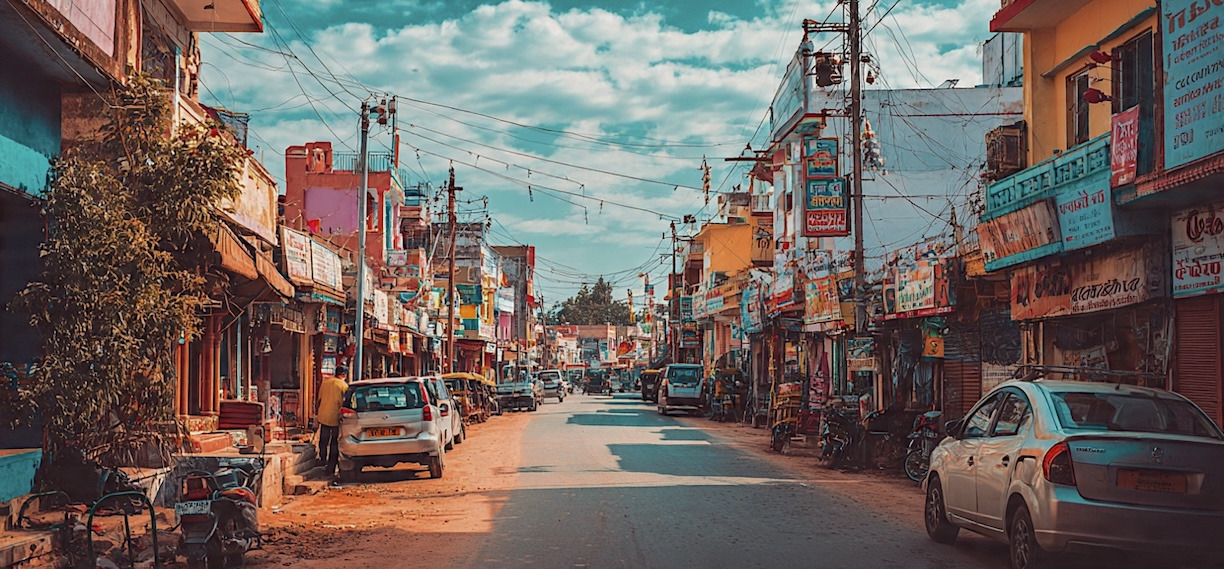
I walk with Joseph Mitchell as my invisible companion. His legendary patience—that quiet, archival love for the 'low-life' and the 'eccentric'—reminds me that there are no small lives, only small observers. I am profoundly thankful for his books; they are my scriptures of the street. They challenge me to step out of the sterile safety of my mind and into the lives of this world. Mitchell taught me that if you listen long enough, every man is a sea.