A Liturgy To The Receding Light
A translucent note on an inevitable sense of melancholia
Joshua Newton
4 min read
By Joshua Newton
A Late Evening Liturgy To The Receding Light
He is leaving. Or perhaps it is simply it—the light—failing. It is past six, the hour of the Great Retreat, and all I can do is lean against the window, a sentinel to the fading. I watch the orange tint on the grey wall of this evening building; it recedes like a tide, draining away until a silly, ancient, liquid sadness—a silt that has settled in me since childhood—floats upward with agonising slowness. I swallow against the sudden bulge in my throat. I do not know what thin, cold fear creeps through the architecture of my bones when the sun begins its descent.
How many evenings enter us..
As a child, I would have sought the small stool by the dog corner, watching my hound as he watched me—ears bent in an arc of empathy, eyes cringed, his head stretched low to offer the benediction of a light lick. That salt on my skin would ease the strangeness of the late light. As an adult, the stool is larger, the comfort is whiskey, and the dogs are long-dead ghosts. Dogs and the people, too—all gathered into the earth.
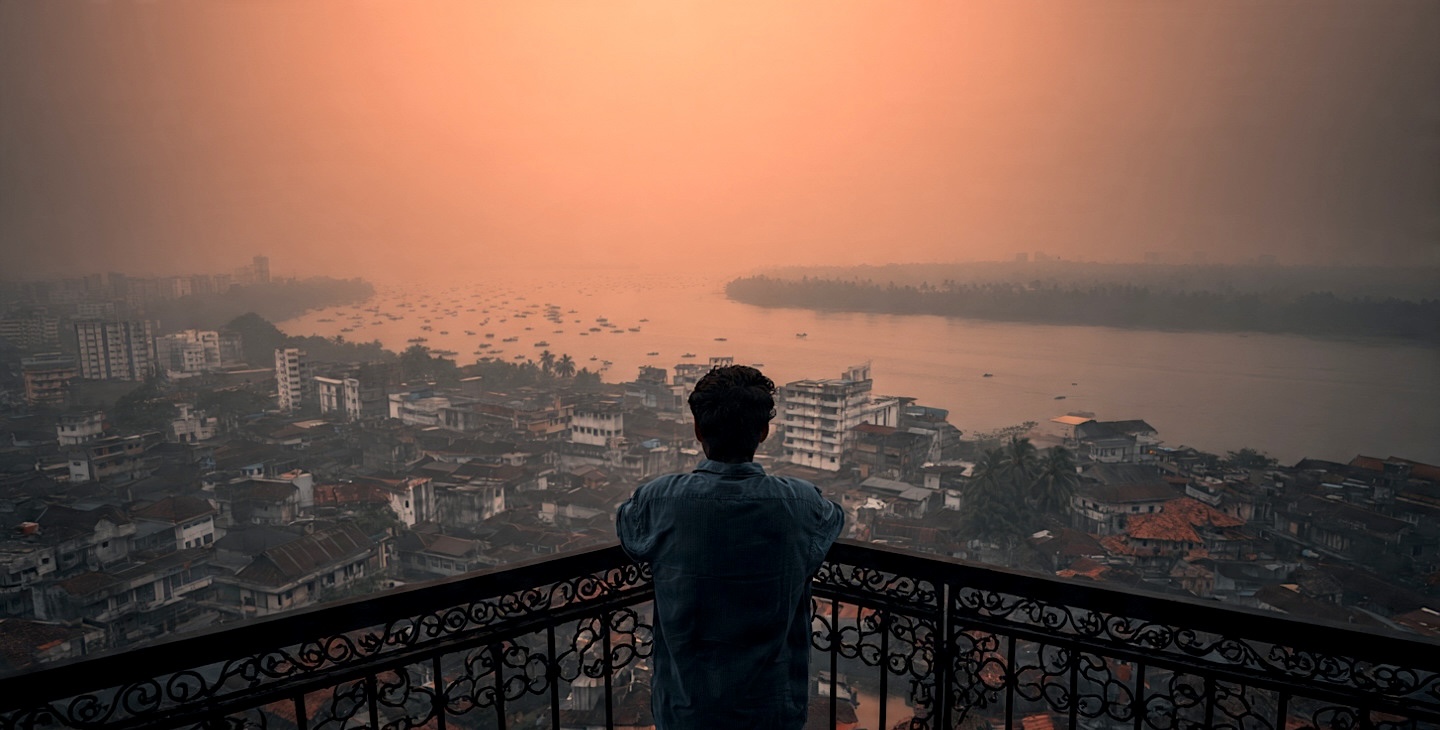
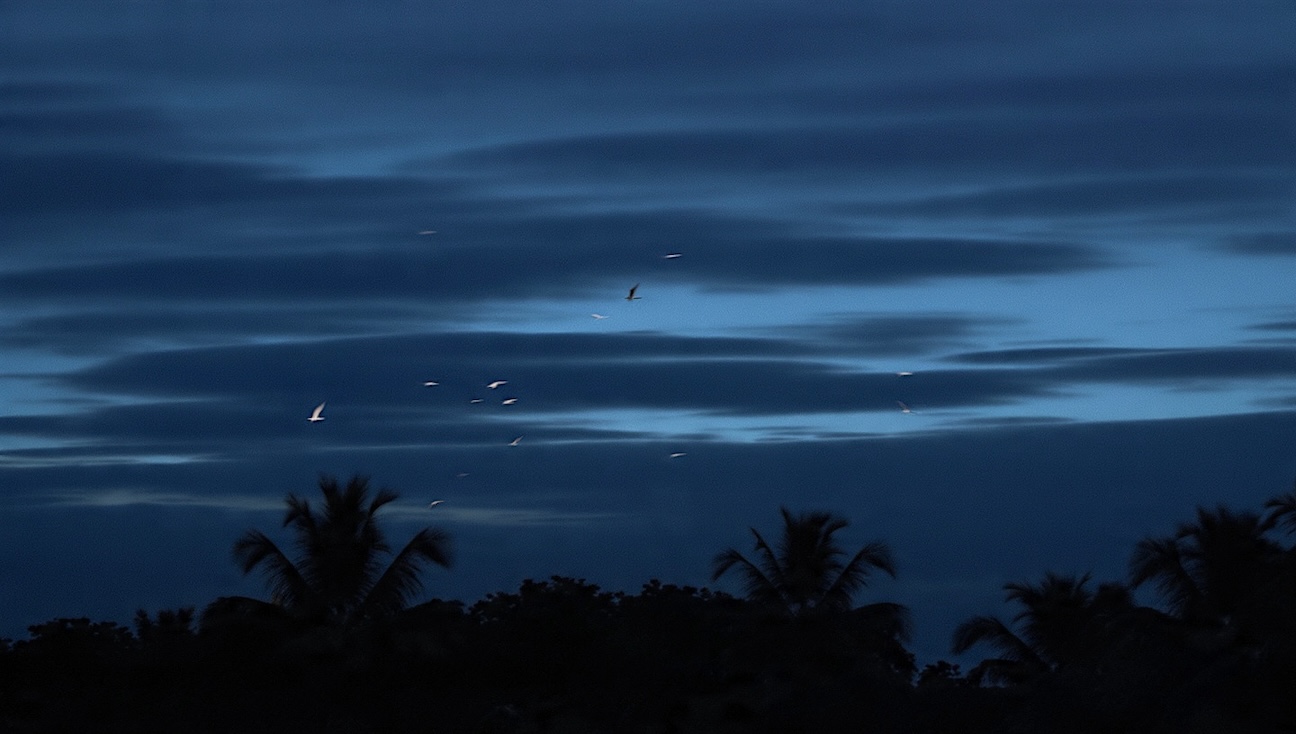
But today, I stand with my arms crossed over the black iron railing of the open balcony, a witness to the orange sky turning to ash. I remember how many hundreds of evenings have entered me like this, absorbed through the skin. We stand before these twilights for no reason, helpless and muted by the weight of the air. Clumps of treetops have surrendered their glow; the rooftops have gone bland, losing their geometry to the dusk. The last birds of the day are frantic needles stitching the sky.
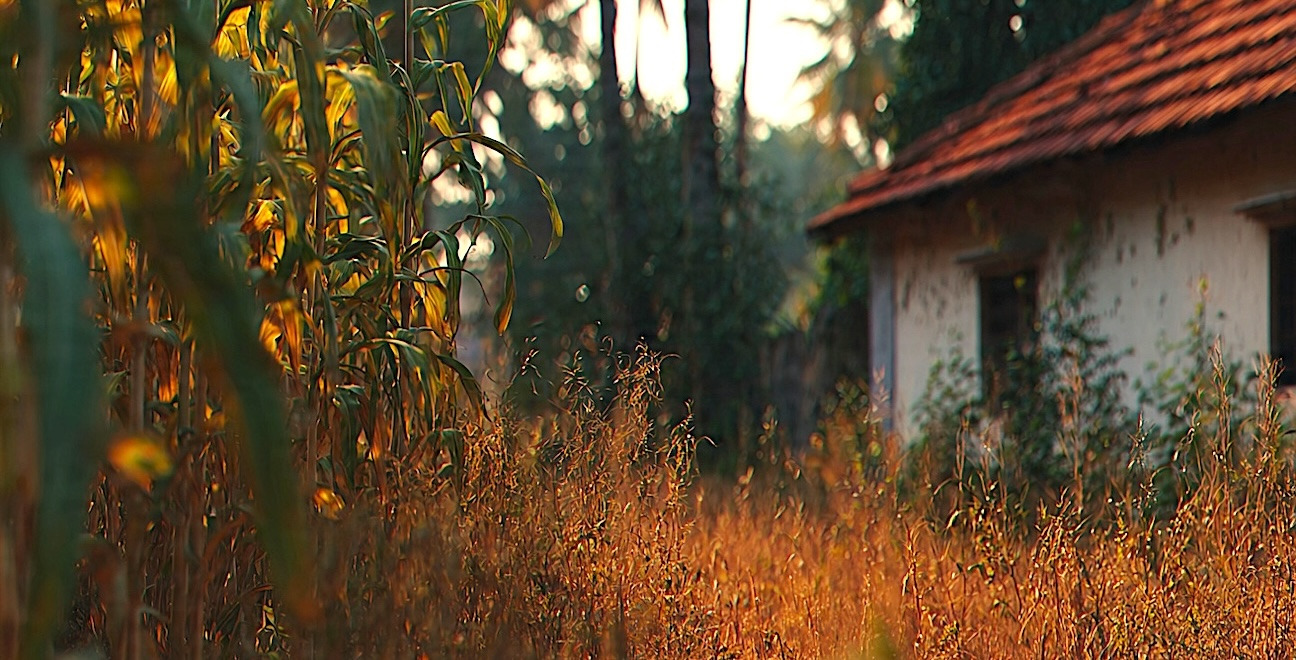
Others, hidden in the dark green folds of the trees, chirp with a persistent, desperate joy—the last children to leave the playground before the gates are locked. Horns blare from the streets, rising and falling, but in this light, they are merely songs, thinned and carried away by the wind’s indifferent hand.
Contemplative essays
The sun does not depart so much as it withdraws its consent. At six, the light on the grey walls of the city begins a slow, rhythmic retreat, leaving behind a world that feels suddenly discarded. We stand at windows, arms crossed against the rising chill of a childhood fear, watching the orange turn to ash. It is an unceremonious death, repeated daily—a reminder that we are all merely tenants in a house of shadows, hording memories like small coins before the night arrives to settle the account.
Days sink into dark oblivion..
I am still caressing the fading light on the balcony wall with my eyes. When a day ends, it ends with a terrible, unceremonious solemnity. It begins in the morning like a freshly cut apple—the white flesh tart and wet with the arrogance of hope. Then, through the hours, it browns; the flesh is exposed too long to the warm air of our strivings. By late evening, the day is almost lifeless—slices of forgotten leftovers sticking to a kitchen board in a house where no one is hungry.
Having stood witness for so many years, we must be collecting these deaths in our innards, hoarding them like coins from a lost currency, and then forgetting them.
We merely live. We exist in the fragile bliss of those white-fleshed mornings. In that light, we move into distances—short, long, opaque, significant—for affairs that are erased as soon as they are enacted. We forget where we are moving beyond the immediate motion. Why we went there, day after day, the acts that waited for the touch of our hands, the sins we committed—all of it slips away.
The days sink into a vast, dark oblivion. Nights come to swallow the evidence of our presence until we emerge, blinking, into newer white days. We do not know where the sun goes to sleep, or where our memories go to roost. Ignorant of our own destinations, we drift from the orange to the brown, from the white into the void.
We watch the light fail..
Isn’t this daily descent is the ego’s litany—a rhythmic reminder of a world built on the shifting sands of birth and decay? We watch the light fail and believe we are witnessing an ending, forgetting that time itself is but a beautiful, tragic hallucination. In this slanting sun, we see the un-reality of our departures, yet even as the orange fades to grey, we are merely dreaming of a darkness that can never truly touch the light of what we are.
Like the days themselves, without reason or witness, we keep dying every day.